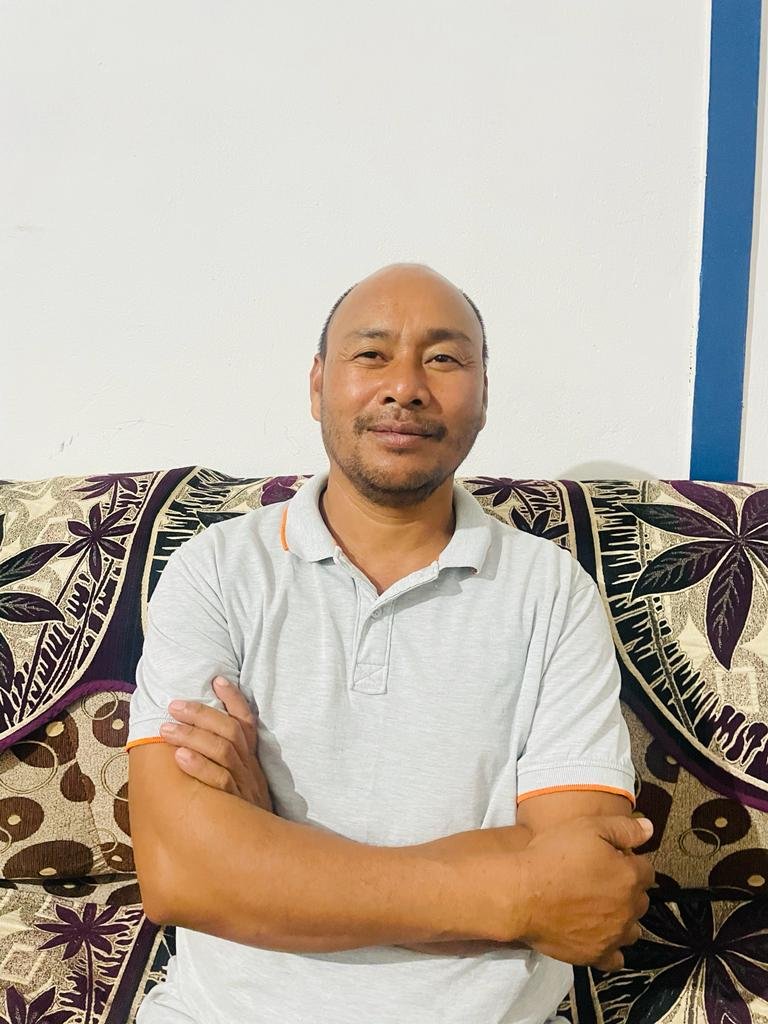
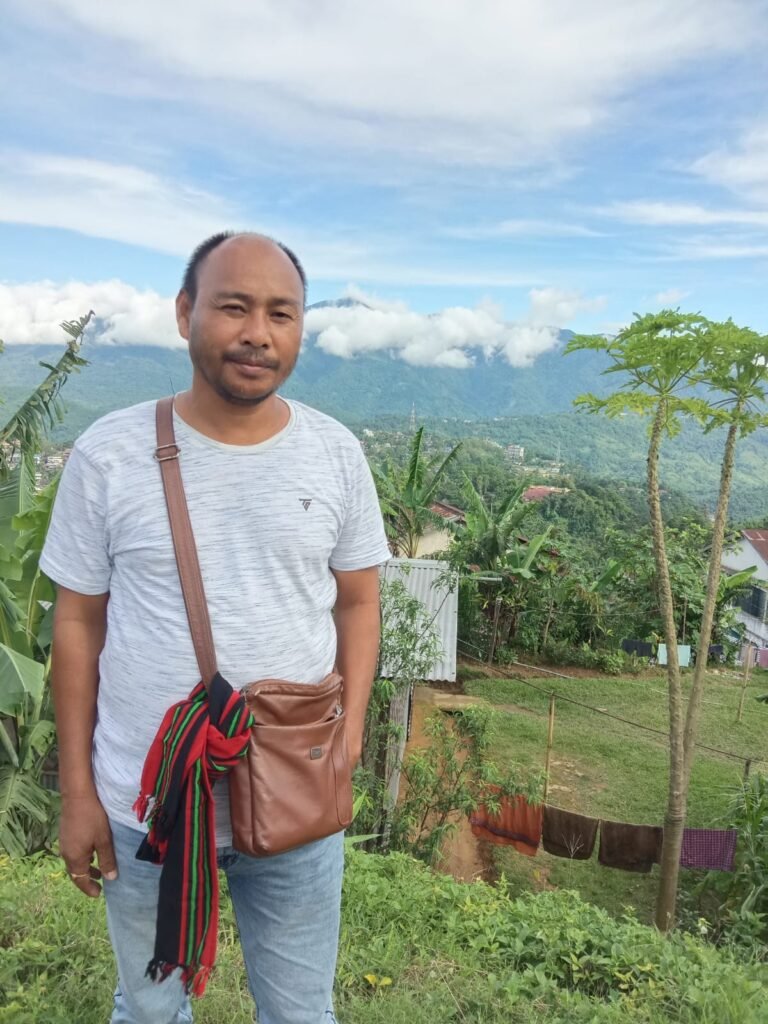
Memorandum of Settlement (MoS) 2011, is one of the major turning points in the history of Karbi Anglong. It was a result of the decade-long arms struggle led by the UPDS, in which several have given their life and blood, while others have faced the worst of tortures from the security forces. In this issue of ‘Unheard Voices’ we will learn from Moniram Ronghang, one of the top leaders of the Karbi armed groups about his life, his experiences while in service and the crushed aspirations of the cadres at the end.
TDE: Tell us about your early life and family.
MR (Moniram Ronghang): I was born on 14th April 1972 at Sarthe Ronghang village, 6th Mile, Diphu-Manja road. My parents were Hidim Ronghang and Kasang Teronpi. We are three brothers and three sisters.
My father was a farmer and my mother a housewife. There are not so much paddy fields those days, my father did cultivation in just a few bighas’ land using spade as there were no oxen. On the other hand, there was enough empty hilly patches my parents did jhum cultivation and grew paddy, maize and other crops.
I did my primary schooling from Chutianala LP School and then joined Longnit High School for ME level. I was brought back to Diphu and admitted at Chandrasing High School, from where I passed my matriculation in 1991. I could not study more as I got married.
I have a son and four daughters. My son Pinchong Ronghang is the eldest child and he had completed his B.Sc. (Agri) from Rajashthan. Among my daughters, Nimsopi Ronghangpi is pursuing her Masters, Hemtun Ronghangpi is pursuing her BA at Royal Global University, Kasim Ronghangpi is reading in the fifth standard at Don Bosco Diphu and the youngest daughter Dalimi Ronghangpi is only two years old.
TDE: How did you associate yourself with social works before joining the armed group?
MR: Even though I did not hold any high post, but I was very actively associated with the ASDC movement. Whenever party leaders called bandhs and strikes, I was among those who would move out of home to see that the party’s call is followed. Later, I also joined the Karbi Students’ Association, and was made the president of Manja branch for the years 1988-91. I would like to mention the name of my friend Hemari Teron, with whom I worked at the Manja branch.
TDE: Tell us about your experiences in the society as a youth.
MR: Coming from a family surviving on subsistence farming, my life had never been a bed of roses. In January 1987, the very next year of the formation of ASDC, the party had called 100-hours bandh for the first time. Along with my friend, I use to go walking to Diphu in support of the bandh. We were taken to jail (a sub-jail at the SP’s office premises as there was no district jail at Diphu then).
I was a strong supporter of the autonomous state movement and like many others, I also had the dream to see ASDC obtain the goal that it has envisioned. However, by the signing of MoU, it was clear that the party had decided to settle down with more powers, rather than continuing the fight for implementation of Article 244(A). The fact despite ASDC ruling two councils, having an MP and winning all 5 MLA seats in the hills district could fulfill the demand of its people, also added fuel to sentiments of the youths who chose to take the help of arms.
TDE: What made you decide to join the arms struggle?
MR: The unfulfilled aspirations of the ASDC movement led to the rise of armed movement for the formation of Karbi National Volunteers (KNV). This was taken as another alternative to mass movement for continuing to fight for autonomous state. Our leaders were inspired by the success in Nagaland and Mizoram. I was not among the founders of the group, but the news and invitation to join reached me quite early. I could not resist, for I was eager to fight for the cause ‘Hemprek’ or autonomous state. When I joined the organisation, I was already married and my eldest child was only a year old.
KNV was formed in the year 1994. The main persons behind its establishments were Harsing Timung of Hawaipur, Langtuk Phangcho of Umrongso, Monsing Rongphar and others. At the beginning it was only and ad-hoc committee with no chairman or secretary but only a convenor. In 1995, after ASDC had signed an MoU, I was convinced by a friend (he is no more) to join the group. He said that we had worked together in ASDC so we have to move ahead with arms struggle together. He took me to the house of Harsing Timung and introduced me to the rebel leaders. Many cadres and leaders then went different places for training.
In the same year, another armed group by the name Karbi People Force (KPF) under the leadership of Prodeep Rongpi as the president and Hiddhinath Rongpi as the general secretary was also formed. Cadres of this group went to Bangladesh and contacted the PLA. Coincidentally, one PLA cadre who was the linkman between his organisation and KPF was apprehended by the police. This led to the arrest of two KPF cadres (Uttom Teron and Gandhi Teron) at Tura and the president Prodeep Rongpi in Karbi Anglong.
After the arrest of Prodeep Rongpi, most of the KPF cadres surrendered, and the post of acting-chairman was given to Longsing Hanse (he was later killed at their Langsoliet Camp) and later to Gandhi Teron.
TDE: Were you ever arrested doing your service in UPDS?
MR: I was arrested with arms on different occasions. On the first instance, I was apprehended along with another friend and was put to jail for an initial period of 3 months and 15 days. On the second occasion, it was in 1999, I was again arrested and put behind bars for 3 months. After that, I was released and sent home by the police. I was unwell and did not directly go to my fellow cadres; instead, I stayed at home. However, just after a month, police came to my house and called me to the police station regarding a case. I was surprised because I already got bail for the cases I was earlier taken into custody. On police station and the court, I was again taken to jail because I was booked under National Security Act (NSA). As per the law, I was kept in jail for another 15 months.
On returning from jail, my health condition further deteriorated since I was already diagnosed with TB (Tuberculosis) and I was growing very thin due to the sickness. At the same time, many more numbers of our cadres were getting arrested by the police, many of them I met while in the jail. Also the news of the Bodo armed group BLT moving ahead with ceasefire and negotiation with the govt. reached us and they appealed us to follow them. Some of our cadres who got arrested opened their mouths and disclosed the hide-outs and other strategic locations leading to more arrests. Accordingly, once out of jail, along with the many others who were already in the notice of police, began to plan for ceasefire and the way forward.
However, at this juncture, most of our cadres were still in the jungles, and the police and security forces were continuously on the hunt. Nevertheless, the party remaining in the jungle and camps did not agree with the idea of ceasefire and the unified armed group split.
TDE: Why was KNV and KPF united?
MR: There was fear that the groups of armed parties may ignite violence against each other. During the ASDC and KAASDCOM clashes too we saw violence, but in that case people did not have weapons. After having arms in hand, if any altercation happened, the situation would have gone to the worst. If we began killing each one another among the same tribe, we would be doing the work of the government from whom we were demanding Hemprek. The two parties then sat for discussion and decided to unite under one nomenclature United People’s Democratic Solidarity (UPDS).
The first step we took was to mingle the cadres of both sides. They were the ones who had to stay together in the camps, they were the ones having arms. So, we made them meet and know each other in order to avoid problems in coming days.
TDE: What was KNPR? What led to the birth of KLNLF?
MR: Karbi Anglong North Cachar Hills Peoples’ Resistance (KNPR) was the army wing of UPDS. It was headed by a Commander-In-Chief (C-in-C). UPDS on the other hand is the political wing of the group and it does not look after the military part. It had 13 members and their responsibility as holding talks and negotiations with the government and other agencies.
At the time UPDS was having negotiations with the govt., parties that was still in the camps and have not come to the mainstream decided to part ways with us and continue to the arms struggle. This was how the KLNLF was born. Later, several other factions like KPLT, UPLA also came out due to the same kind of disagreements.
TDE: What positions did you hold in UPDS?
MR: Initially, during the times of KNV I did not take any position and worked as a cadre. Later, I was promoted and included in the Central Executive and during the general council, I was appointed as finance secretary. When UPDS had come to the mainstream, I as holding the post of joint secretary, but after the death of Gandhi Teron (killed during clash among the two factions), I was given the charge of vice-chairman.
TDE: How did you get new cadres?
MR: It was not a tough work to take new cadres in the group, many were ready to join us. However, we never recruited them so easily or never directly sent them the camps or let them join secret meetings, it was a risk. For about two years we study them and let them assist us in doing trivial tasks. This was followed by leadership trainings and political classes. During this period, we try to know the actual cause why someone was joining us. Often, we found that youths wanted to join us out of frustration in love, family and with a motive of taking revenge, rejected them, except a few whom we failed to identity.
We made it clear to them that there won’t be any salary or TA/DA, it is purely voluntary. The duration of the struggle was uncertain, we never knew when it will end, so we also took the consent of the parents and single child and the first child were not allowed to join us. However, after the ceasefire, we lifted such barriers.
TDE: Please tell us about the tough situations you and your family had faced because of the arms struggle.
MR: In the course our arms struggle my family had to suffer a lot. My house being located near the main road, police frequently came in search of me. There was always fear in the house. My father was once taken away from home at night and was left in another village. This had a big impact in his mind and he decided not to stay at home, instead he began taking shelter in the jhum site and forest. My brothers were also often taken to the police station and kept overnight.
I would also want to mention here about the family of Mohori Dera, one of our top leaders. For 4-5 years, his family never had proper house, police regularly visited them and destroyed everything. This led Mohori’s wife to abandon home and live in the jungle with her husband. Once, their second daughter, who was in 10th standard was taken to the police station, she was tortured physically and mentally, she was made to assist them in record keeping works with her legs tied.
We dedicated our lives for the cause of our motherland. In our journey, we have faced several hardships which words cannot explain. Many of our co-cadres gave their blood to become martyrs. Those among us who have been put in jails have faced third degree torture. So I often say, “I do not want to see the torture scenes in movies because we have faced them in reality.” Gandhi Teron and I were most brutally tortured for we never opened our mouths. In fact, there were many secrets of the organisation which we never knew.
There are many who had suffered more than us, many of which we never got to know. Several families have sacrificed their sons and daughters for the sake of the motherland, there is no word to describe their pain.
TDE: Was the Peace Accord of 2011 able to fulfill your aspirations?
MR: Everyone needs peace, but it should not come as giving chocolate to a child, we should have the upper hand even in the period after signing the accord. Even the secretaries of the central govt. said to us that KAAC being s sixth schedules council has enough powers for safeguard the rights of people and do developmental works and asked us to run the council. While, the talk was going on, they barred us from politicians along with us. After many pleadings only we could take Elwin Teron.
I was not a member of the team having talks with the govt. Two days before the signing of the accord, we were invited to Delhi. We went there thinking we would be shared with the minutes of the accord and the leaders will discuss on the way forward. Nothing happened. Even on the day of signing the accord, the papers were available only with the members of the negotiating team. We were given copies of the accord only on reaching Karbi Hemtun, Guwahati.
The lack of transparency was a shock to me and all other cadres. Nevertheless, the accord was already signed. We kept silent, lest there may be arrest warrant issued against those who showed dissatisfaction.
Soon after UPDS was dissolved, the EC declared elections for KAAC. Here also, our leaders did not take us into confidence, we never got to share our opinions on who should contest from which constituency and with which political party should we join hands. The wrong placement of candidates was the biggest mistakes that led to our defeat. Except Surjya Rongphar, Kangjang Terang and Horensing Bey, no one else was given ticket to contest for the place of their choice. In the People’s Alliance for Peace Agreement (PAPA), both UPDS and ASDC was being run by only a few heads, others had no words to say.
We were defeated in the election, and since then only those who won the election are in limelight. In a way, MoS was the end of UPDS as well as our strength. I did what I could for the land and I am happy to have contributed into the movement. But I am distressed with the fact that the end result was not as we expected. Even those persons who we considered the wisest did not take wise decisions.
TDE: Can you tell us about the office land deal controversy?
MR: UPDS did not have any property, except a small plot of land in the middle of Diphu town (the office of the Ex-UPDS Welfare Society). This land was bought for the construction of a building to be used as a guest for all the ex-cadres of the group as well as all Karbis coming from all parts of district. The plan was also to include two-storied parking lot in the building. Now, we have come to know that the land has been sold without the consent people like us.
MP Horensing Bey as well as KAAC CEM Dr. Tuliram Ronghang agreed to allocate 10 crores rupees for the purpose. However, their assurance was still a lie and our leaders have sold the land without our knowledge. MP Horensing Bey once assured to provide Rs. 1 Crore, while the CEM also promised Rs. 10 crore to the ex-cadres of UPDS for doing plantation works both of which are yet to be fulfilled. The CEM should not forget that almost all the development projects happening in Karbi Anglong are results of MoU and MoS. Our former leaders who are now in good positions must not forget those who have sacrificed everything for the sake of the society.
TDE: How did you keep yourself busy after coming to the mainstream? What are the advantages of plantation agriculture?
MR: Even before I joined UPDS and while I was active in the organisation, I did not give up farming. I cultivated paddy, sugarcane and then rubber. Once we signed the MoS, I got more time to dedicate in farming works, which made me financially independent. I had never had to any person in power to beg their help.
Also, our village do not have anyone doing govt. job. So, I appealed all families having empty land to cultivate rubber and now almost all the households in our village have rubber plantation. Those who do not have land for cultivation are engaged in nursery and sell saplings.
Through plantation farming rare and valuable species of trees like teak, ‘chandan’, ‘agar’ and others can be grown; this will benefit both the environment as well as the owner. Keeping land empty gives chance to the outsider to enter, claim land and establish settlements. So, plantation can help in safeguarding land and territory. Plantation cultivation requires man power, it can be a means to stop the migration of youths to places outside the state in search of work. And, as far as I have seen, rubber is the best crop suitable for plantation in Karbi Anglong.
TDE: What are your future plans?
MR: Presently, I do not have any such intention in mind, but I do support the party whosoever is working honestly for the sake of the people and not for individual’s interest. Personally, I wish to continue with my rubber plantation and also run a small shop. However, the dream for an autonomous state is still alive in me and if in the future, a moment comes for reigniting the fight for statehood without resulting in the suffering of the people, I am interested to go for it.